


A Non-Surgical Treatment Method for Deep Tissue Cancers Is Being Developed at Boğaziçi University
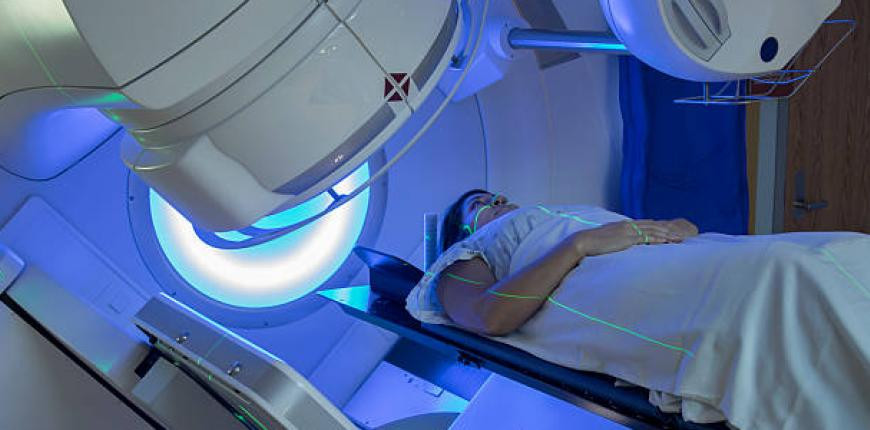
Photodynamic therapy, which is mostly used in the treatment of skin cancers and is known for having few side effects, fails to deliver the desired results when cancerous cells are located in deep regions where light rays cannot easily reach. Associate Professor Şaron Çatak, a faculty member of the Department of Chemistry at Boğaziçi University, and her team have launched a study aimed at eliminating this disadvantage of photodynamic therapy and doubling the light-harvesting capacity of the molecules responsible for capturing light. In the project led by Şaron Çatak, researchers will calculate how these molecules behave inside cells when antennae with two-photon absorption properties are attached to them, and the results obtained will serve as a guide for developing photodynamic therapy methods to treat organ cancers located in deep tissues.
The project titled “design of new photosensitizers for photodynamic therapy,” led by Associate Professor Şaron Çatak from the Department of Chemistry at Boğaziçi University, has been awarded support under the TÜBİTAK 1001 program. Planned to last two years, the project includes one undergraduate student, two master’s students, and one doctoral student as researchers alongside Associate Professor Çatak.

A Cancer Treatment with Minimal Side Effects
Photodynamic therapy (PDT), one of the non-surgical approaches used in cancer treatment, has significantly fewer side effects on the body compared to other cancer therapies. Associate Professor Şaron Çatak explains how this treatment method works:In photodynamic therapy, the drug administered to the body actually spreads throughout the system, but these drugs are activated by light. Therefore, light is directed only to the cancerous area that is to be treated, and by activating the drugs in that region, it becomes possible to achieve targeted treatment. The drugs that are not activated are eliminated from the body. As a result, the side effects of the treatment are minimized. Moreover, compared to other cancer therapies, its cost is quite low.”
The only disadvantage of photodynamic therapy arises when cancerous cells are located in deep tissues where light cannot easily reach. Dr. Çatak explains: “Currently, research is being conducted on molecules that can effectively absorb light in deep tissue. For this reason, PDT has so far rarely been used for the treatment of deep-tissue tumors. However, in this project, we aim to overcome this limitation of PDT by designing drug molecules that can also be activated in deep tissues,” she notes, emphasizing their goal to enhance the effectiveness of photodynamic therapy.
The Light-Harvesting Capacity of Molecules Will Double
Associate Professor Şaron Çatak explains that in photodynamic therapy, a drug molecule called a photosensitizer (PS) is used, and their goal is to increase the treatment’s effectiveness by attaching antennas to these molecules: “We will add antennas with two-photon absorption properties to an FDA-approved PS molecule that we are working on. When these antennas, which absorb two photons, are attached to this chlorin-derivative molecule, it will be able to capture twice as much light as normal. When the PS molecule absorbs light, it first transitions to a singlet excited state, and then, depending on the molecule’s photophysical properties, it moves from the singlet excited state to a triplet excited state. In the body, the triplet-excited PS molecule encounters oxygen, which naturally exists in a triplet state, and transfers its energy to the oxygen, converting it into a reactive form. In other words, the role of the PS molecule is to absorb light and transfer that energy to oxygen. In short, it is actually the oxygen that destroys the cells, not the PS molecule itself; however, the PS molecule is responsible for activating the oxygen.”
According to Çatak, the effectiveness of photodynamic therapy for cancer cells embedded in deep tissues depends on PS molecules being able to absorb more light: "We want to add antennas that can absorb two photons to the PS molecules so that they can absorb energy in deep tissues as well. ‘Because even if the injected PS molecule reaches deep tissue, it cannot absorb effectively at this wavelength, and therefore the molecule cannot be effective for PDT here.’ ‘However, the high-wavelength light (red light) used in treatment can penetrate deep tissue.’ ‘With this approach, when we add two-photon-absorbing antennas to the molecule, we will double the number of absorbed photons.’ ‘Furthermore, we will have the opportunity to test how these molecules progress in body tissue under laboratory conditions and how the drugs interact with the cell membrane."
A guiding study for experimental chemists
Emphasising that the project is entirely a theoretical molecular modelling study and will progress through computer simulations, Associate Professor Sharon Çatak explains the advantages of the project's outputs as follows: "The laboratories where the molecules we are talking about are synthesised already exist; we will investigate how they behave inside cells through modelling. The advantage of these computational chemistry studies lies in being able to determine the photophysical properties of molecules in great detail. We provide experimental chemists with predictions on how they can modify which molecules, so instead of repeatedly trial and error, they can synthesise molecules based on what we calculate, significantly accelerating the process."
For more information about Assoc. Prof. Dr. Sharon Çatak's research group, please visit the link:
Computational Chemistry & Biochemistry Group
www.ccbg.boun.edu.tr
